A 1350KV motor is like a discerning dancer; it requires the right rhythm (voltage) to execute perfect moves:
3S Battery (11.1V): No-load speed of approximately 15,000 RPM-ideal for lightweight racing drones.
4S Battery (14.8V): Speed increases to 20,000 RPM-satisfying the demands of freestyle aerobatics.
Exceeding 4S Requires Caution: This may push the motor's bearings and winding beyond their structural limits.
The Art of Balancing Capacity and Discharge Rate
When it comes to battery capacity, bigger isn't always better; much like choosing a breakfast, the key lies in finding the right balance:
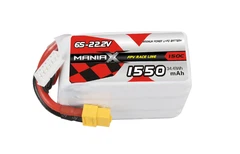
1500mAh Battery: Offers a flight time of approximately 5 minutes-suitable for high-intensity, explosive maneuvers.
2200mAh Battery: Extends flight time to 8 minutes, though the increased weight may compromise maneuverability.
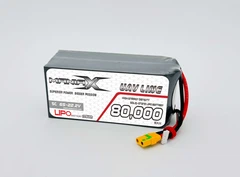
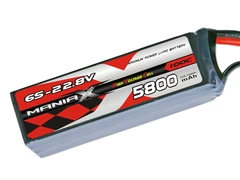
Selecting the Discharge Rate (C-Rating): Continuous Current = Capacity × C-Rating; ensure the chosen C-rating meets the motor's maximum current requirements.
These practical tips will help you optimize the efficiency of your power system:
Propeller Matching: 5045 3-blade propellers place a heavier load on the motor compared to 6030 2-blade propellers.
Temperature Monitoring: If the motor's operating temperature exceeds 70°C, adjustments to your configuration are required.
Wire Selection: 10/12AWG silicone wire is better suited for high-current applications.
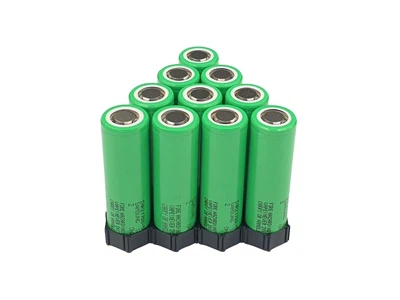
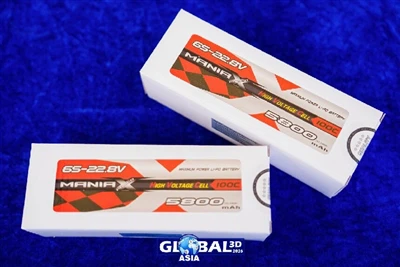
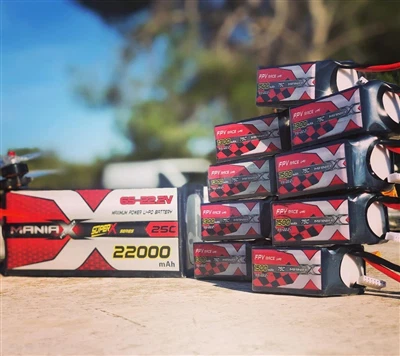
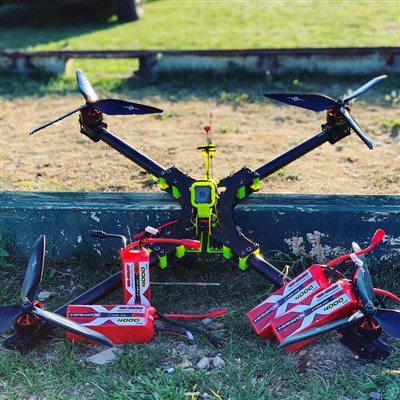
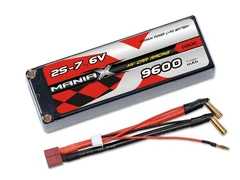
FPV drone batteries are designed for use across the high-speed model aircraft sector, encompassing deducted-fan models, indoor and outdoor FPV racing drones, and acrobatic flight drones.
These devices impose extremely rigorous demands on a battery's instantaneous power output; for instance, during high-speed climbs or sharp turns, the motors require a current surge-several times their rated power-to be delivered within a very brief time-frame. Conventional batteries, due to excessive internal resistance, may suffer from severe voltage drops that trigger power interruptions or result in a loss of aircraft control.
Furthermore, lightweight design is paramount in model aviation. Reducing battery weight by just 10 grams can extend flight duration by approximately 5%. Consequently, FPV batteries frequently utilize reinforced casing materials to maintain structural integrity while keeping weight in check; they also support customized States of Charge (SOC) to meet the specific requirements of diverse flight scenarios.