



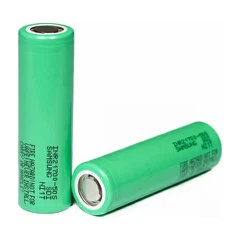


Cylindrical lithium-ion batteries are typically labeled as 3.7V; this figure actually represents the "nominal voltage"-much like a person's average height. In reality, a fully charged battery can reach 4.2V, while a fully discharged one sits at approximately 2.75V. This specific value is derived from the operating platform voltage characteristic of mainstream lithium cobalt oxide batteries-analogous to a mobile phone defaulting to 50% volume playback: neither the loudest nor the quietest setting.
Materials Determine Voltage: It's Not Just 3.7V
Batteries utilizing different cathode materials exhibit distinct voltage levels:
Lithium Iron Phosphate (LiFePO4): Nominal 3.2V; fully charged 3.65V
Ternary Lithium (NCM/NCA): Nominal 3.6–3.7V; fully charged 4.2V
Lithium Titanate (LTO): Nominal 2.4V; fully charged 2.8V
These variations are akin to the combustion temperatures of different fuels; they are fundamentally rooted in the chemical properties of the materials themselves.
Three Real-World Factors Influencing Voltage
In practical usage, voltage tends to "fluctuate":
Temperature: At temperatures of -20°C, the voltage may drop by as much as 10%.
Load: During high-current discharge, the voltage experiences an instantaneous drop.
Lifespan: As a battery ages, its maximum voltage when fully charged will gradually decline.