
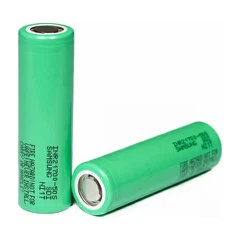

Cylindrical lithium-ion batteries represent one of the most widely adopted battery form factors in fields such as consumer electronics and energy storage systems. Their core structure comprises a cathode, an anode, an electrolyte, and a separator; charging and discharging are achieved through the migration of lithium ions between the positive and negative electrodes. Taking the 18650 model as an example, the "18" in its designation denotes a diameter of 18 millimeters, the "65" indicates a height of 65 millimeters, and the "0" signifies a cylindrical design. This standardized sizing confers significant advantages in terms of compatibility and mass production scalability. Typically operating at a nominal voltage of 3.7V, these batteries feature a stable discharge plateau and high energy density; furthermore, they support parameter customization-such as internal resistance and capacity-to meet the diverse requirements of various application scenarios.
In terms of technical standards, cylindrical lithium-ion batteries must comply with international safety regulations-such as IEC 62133-2:2017-to ensure stability under extreme conditions, including overcharging, over-discharging, and short-circuiting. For a model with a nominal capacity of 5200mAh, for instance, the charging voltage is 4.2V and the charging current is 2.6A, allowing for a full charge within 3.5 hours; the operating voltage range under load spans 3.0V to 4.2V, making it suitable for consumer electronic devices that require a continuous power supply. It is recommended that storage temperatures be maintained at approximately 25°C to prevent electrolyte decomposition caused by high temperatures or reduced ionic activity caused by low temperatures, thereby extending the battery's overall lifespan.