
Positive Electrode - The active material typically consists of lithium manganese oxide, lithium cobalt oxide, or lithium nickel manganese cobalt oxide. Electric bicycles commonly utilize lithium nickel manganese cobalt oxide (colloquially known as "ternary" material), or a blend of ternary material with a small amount of lithium manganese oxide; pure lithium manganese oxide and lithium iron phosphate are gradually being phased out due to their large volume, suboptimal performance, or high cost. The conductive current collector consists of electrolytic aluminum foil with a thickness of 10–20 micrometers.
Separator - A specially formed polymer film featuring a microporous structure that allows lithium ions to pass freely while blocking the passage of electrons.
Negative Electrode - The active material is graphite, or a carbon material with a graphite-like structure. The conductive current collector consists of electrolytic copper foil with a thickness of 7–15 micrometers.
Organic Electrolyte - A carbonate-based solvent in which lithium hexafluorophosphate is dissolved; polymer-based batteries, conversely, utilize a gel-like electrolyte.
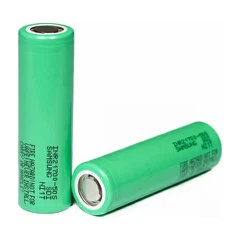
Battery Casing - Enclosures are categorized into steel shells (square-shaped variants are rarely used), aluminum shells, nickel-plated iron shells (used for cylindrical batteries), and aluminum-plastic laminate film (soft-pack packaging). Additionally, the battery cap serves as the terminal for the positive and negative electrode connections.