
Hey there! As a supplier of high voltage semi-solid state batteries, I've seen firsthand how these powerhouses are changing the game in various industries. But one question that often pops up is, "How does the performance of high voltage semi-solid state batteries change with age?" Let's dive into this topic and find out.
Understanding High Voltage Semi-Solid State Batteries
Before we talk about how age affects performance, let's get a quick rundown on what high voltage semi-solid state batteries are. These batteries are a step up from traditional lithium-ion batteries. They use a semi-solid electrolyte instead of a liquid one, which brings a bunch of benefits like better safety, higher energy density, and longer lifespan.
The high voltage aspect means they can store and deliver more power, making them ideal for applications that need a lot of juice, like electric vehicles, drones, and high-tech gadgets. At our company, we're all about providing top-notch high voltage semi-solid state batteries to meet the growing demand for high-performance energy solutions.
Factors Affecting Battery Performance Over Time
There are several factors that can cause changes in the performance of high voltage semi-solid state batteries as they age.
Chemical Reactions Inside the Battery
Over time, chemical reactions occur within the battery, leading to the degradation of the electrodes and the electrolyte. For example, the lithium ions that move back and forth between the electrodes during charging and discharging can cause the growth of something called lithium dendrites. These tiny, tree-like structures can pierce through the separator between the electrodes, causing a short circuit and reducing the battery's performance and safety.
Temperature
Temperature plays a huge role in battery aging. Extreme hot or cold temperatures can speed up the chemical reactions inside the battery, leading to faster degradation. When it's too hot, the electrolyte can break down, and the electrodes can become damaged. On the other hand, cold temperatures can slow down the movement of lithium ions, reducing the battery's capacity and performance.
Charging and Discharging Cycles
Every time a battery is charged and discharged, it goes through a cycle. The more cycles a battery goes through, the more wear and tear it experiences. High voltage semi-solid state batteries are designed to withstand a certain number of cycles, but eventually, the performance will start to decline. For example, after a few hundred cycles, you might notice a decrease in the battery's capacity, which means it can't hold as much charge as it used to.
How to Measure the Performance Degradation
Capacity Fade
One of the most obvious signs of battery aging is capacity fade. This is the reduction in the amount of charge a battery can hold over time. We measure capacity fade by comparing the battery's current capacity to its original capacity. For example, if a battery originally had a capacity of 100 ampere-hours (Ah) and after a year of use, it has a capacity of 90 Ah, then it has experienced a 10% capacity fade.
Internal Resistance Increase
As a battery ages, its internal resistance tends to increase. Internal resistance is like a roadblock for the flow of electricity within the battery. When the internal resistance goes up, it becomes harder for the battery to deliver power efficiently, which can lead to a decrease in performance and an increase in heat generation. We can measure internal resistance using specialized equipment, and we keep an eye on it to monitor the battery's health.
Impact on Different Applications
Drones
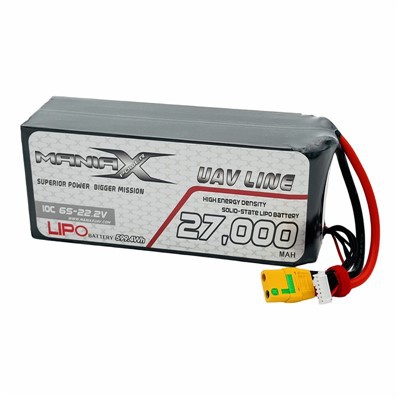
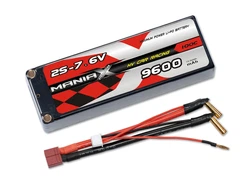
Drones rely heavily on high-performance batteries to stay in the air. As a high voltage semi-solid state battery ages, the reduced capacity and increased internal resistance can have a significant impact on a drone's flight time and performance. For example, a drone that originally had a flight time of 30 minutes might see that time reduced to 20 minutes after a year of use. At our company, we offer a range of high-quality batteries for drones, such as the ManiaX Solid-State Lipo 6S-22,2V 27,000mAH 10C Drone & UAV Battery, the ManiaX Solid-State Lipo 6S-22,2V 16,000mAH 10C Drone & UAV Battery, the ManiaX Solid-State Lipo 12S-44.4V 16,000mAH 10C Drone & UAV Battery, the ManiaX Solid-State Lipo 14S-51.8V 27,000mAH 10C Drone & UAV Battery, and the ManiaX Solid-State Lipo 12S-44.4V 27,000mAH 10C Drone & UAV Battery. These batteries are designed to have a long lifespan and maintain good performance even as they age.


Electric Vehicles
In electric vehicles, battery performance degradation can affect the vehicle's range and acceleration. A battery with reduced capacity means the vehicle can't travel as far on a single charge, and the increased internal resistance can make the acceleration slower. This is why it's crucial to have high-quality batteries that can withstand the test of time. Our high voltage semi-solid state batteries are engineered to provide long-lasting performance, ensuring that electric vehicle owners can enjoy a reliable and efficient driving experience.
Strategies to Mitigate Performance Degradation
While battery aging is inevitable, there are some strategies we can use to slow down the performance degradation.
Proper Charging and Discharging
It's important to follow the recommended charging and discharging procedures for high voltage semi-solid state batteries. Avoid overcharging or over-discharging the battery, as this can cause significant damage. For example, it's a good idea to charge the battery to around 80% and avoid letting it discharge below 20%.
Temperature Management
Keeping the battery at an optimal temperature can help extend its lifespan. This can be achieved through proper insulation and cooling systems. For example, in electric vehicles, there are often cooling systems in place to keep the battery at a safe temperature during operation.
Battery Management Systems (BMS)
A good BMS can monitor the battery's state of charge, temperature, and other parameters, and take corrective actions to prevent overcharging, over-discharging, and overheating. Our batteries are equipped with advanced BMS technology to ensure optimal performance and safety.
Conclusion
In conclusion, the performance of high voltage semi-solid state batteries does change with age, but with proper care and the right technology, we can minimize the impact of aging and ensure that these batteries continue to provide reliable power for a long time. Whether you're in the drone industry, the electric vehicle market, or any other industry that relies on high-performance batteries, our company is here to provide you with the best high voltage semi-solid state battery solutions.
If you're interested in learning more about our products or discussing a potential purchase, don't hesitate to reach out. We're always happy to have a chat and help you find the perfect battery for your needs.
References
- Arora, P., Haran, B., White, R. E., & Doyle, M. (1999). Development of a simulation model for a lithium-ion battery. Journal of the Electrochemical Society, 146(11), 3970-3983.
- Xu, K. (2004). Nonaqueous liquid electrolytes for lithium-based rechargeable batteries. Chemical reviews, 104(10), 4303-4417.
- Tarascon, J.-M., & Armand, M. (2001). Issues and challenges facing rechargeable lithium batteries. Nature, 414(6861), 359-367.