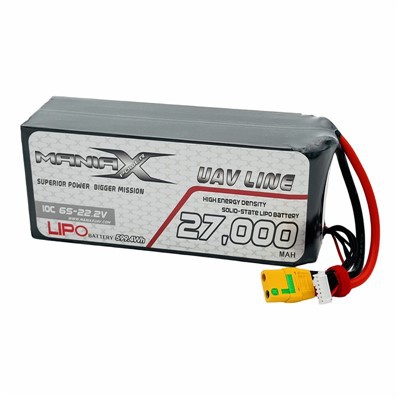

Yo, what's up everyone? I'm a supplier of semi-solid state surveying drone batteries. Today, I wanna chat about the heat dissipation performance of these batteries.
Why Heat Dissipation Matters in Drone Batteries
First off, let's talk about why heat dissipation is such a big deal for surveying drone batteries. When a drone's flying, the battery's working hard, pumping out power to keep the drone in the air and run all its fancy sensors and cameras. This process generates heat, and if that heat doesn't get dissipated properly, it can lead to some serious problems.


High temperatures can reduce the battery's efficiency. You see, the chemical reactions inside the battery that produce electricity work best at a certain temperature range. When it gets too hot, these reactions start to go haywire, and the battery can't deliver power as effectively. That means less flight time for your drone, which is a major bummer for surveying jobs where you need to cover a lot of ground.
Overheating can also shorten the battery's lifespan. The heat can damage the internal components of the battery, like the electrodes and the electrolyte. This damage accumulates over time, and before you know it, your battery is kaput. And replacing batteries can be expensive, so you definitely want to avoid that.
Heat Dissipation in Semi - Solid State Surveying Drone Batteries
Now, let's get into the nitty - gritty of how semi - solid state surveying drone batteries handle heat. Semi - solid state batteries are a step up from traditional lithium - ion batteries. They use a semi - solid electrolyte instead of a liquid one, which has some major advantages when it comes to heat dissipation.
The semi - solid electrolyte is more stable than a liquid electrolyte. It doesn't slosh around inside the battery as much, which means there's less risk of short - circuits caused by the electrolyte moving and touching the wrong parts. This stability also helps with heat management. The semi - solid structure can conduct heat more evenly throughout the battery, preventing hot spots from forming.
Hot spots are bad news. They can cause the battery to degrade faster in those areas and increase the risk of thermal runaway. Thermal runaway is a situation where the heat in the battery keeps increasing on its own, and it can lead to the battery catching fire or exploding. With semi - solid state batteries, the better heat distribution reduces the chances of this happening.
Our company's semi - solid state surveying drone batteries are designed with special heat - dissipation features. We've added heat - conducting materials to the battery casing. These materials can quickly transfer the heat from the inside of the battery to the outside, where it can be dissipated into the air.
Real - World Performance
Let's talk about how these batteries perform in real - world scenarios. We've done a bunch of tests with our semi - solid state surveying drone batteries. In one test, we flew a drone equipped with our battery for a long - distance surveying mission in a hot environment. The temperature outside was around 35 degrees Celsius (95 degrees Fahrenheit).
During the flight, we monitored the battery temperature closely. We found that the battery temperature only rose to about 45 degrees Celsius (113 degrees Fahrenheit), even after hours of continuous use. This is a great result, considering that traditional lithium - ion batteries can easily reach 60 degrees Celsius (140 degrees Fahrenheit) or more under the same conditions.
Another test we did was to compare the flight time of a drone using our semi - solid state battery with a drone using a traditional lithium - ion battery. The drones were flown under the same conditions, and we found that the drone with our semi - solid state battery had about 20% more flight time. This is because the better heat dissipation kept the battery operating at a more efficient temperature, allowing it to deliver power more effectively.
Our Product Line
We've got a great range of semi - solid state surveying drone batteries to choose from. Check out some of our popular models:
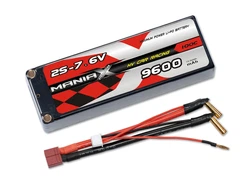
- ManiaX Solid - State Lipo 12S - 44.4V 39,000mAH 10C Drone & UAV Battery: This battery is a beast. It's got a high capacity and a good discharge rate, making it perfect for long - range surveying drones.
- ManiaX Solid - State Lipo 14S - 51.8V 36,000mAH 10C Drone & UAV Battery: If you need a battery with a higher voltage for more power - hungry drones, this one's for you.
- ManiaX Solid - State Lipo 14S - 51.8V 52,000mAH 10C Drone & UAV Battery: With a massive capacity, this battery can keep your drone flying for a long time.
- ManiaX Solid - State Lipo 14S - 51.8V 33,000mAH 10C Drone & UAV Battery: It strikes a good balance between capacity and size, making it suitable for a wide range of drones.
- ManiaX Solid - State Lipo 6S - 22,2V 52,000mAH 10C Drone & UAV Battery: Ideal for smaller surveying drones that need a lot of power but have limited space.
Conclusion
In conclusion, the heat dissipation performance of semi - solid state surveying drone batteries is top - notch. Their unique semi - solid electrolyte and well - designed heat - dissipation features make them a great choice for drone surveying applications. They can handle high temperatures better, provide longer flight times, and have a longer lifespan than traditional lithium - ion batteries.
If you're in the market for high - performance surveying drone batteries, don't hesitate to reach out. We're happy to have a chat with you about your specific needs and how our batteries can meet them.
References
- Archer, L. A., & Rong, Z. (2017). Perspectives for rechargeable solid - state batteries. Science, 357(6348), 463 - 466.
- Liu, W., Li, X., & Zhang, J. (2019). Challenges and perspectives of solid - state batteries. Journal of Materials Chemistry A, 7(39), 22561 - 22577.