


Introduction
As drones evolve from simple aircraft into sophisticated, autonomous aerial robots, the demands on their power systems are skyrocketing. The commercial and industrial drone market is projecting immense growth, creating a need for energy solutions that go far beyond the capabilities of standard batteries. While current lithium polymer and semi-solid state batteries represent the state of the art, the future will be defined by intelligent energy ecosystems, new form factors, and novel power sources that enable missions previously confined to the realm of science fiction.
The Intelligence Revolution: The Rise of the AI-Powered BMS
The Battery Management System is evolving from a simple protection circuit to an intelligent energy brain. Future BMS technology will leverage Artificial Intelligence (AI) and cloud connectivity to fundamentally change how drone fleets are managed .
①Predictive Analytic: AI algorithms will analyze flight data, battery usage patterns, and environmental conditions to predict the exact SoH of a battery. This moves maintenance from a reactive schedule to a proactive one, allowing operators to replace a battery before it becomes a failure risk, significantly improving fleet safety and reliability.
②Adaptive Charging Profiles: An intelligent BMS will analyze the internal state of a cell and create a dynamic, personalized charging profile. This will minimize stress and degradation during charging, further extending cycle life and reducing total ownership costs .
③Cloud-Connected Diagnostics: Fleet managers will be able to monitor the health, status, and location of every battery in their inventory from a single dashboard. This enables optimized battery deployment, early warnings of degrading packs, and data-driven decisions to improve operational efficiency. This is particularly crucial for large-scale logistics and inspection companies.
Hybrid and Novel Power Sources
While battery technology will remain the primary power source for the foreseeable future, other technologies are emerging to supplement or replace them for specific applications.
①Hybrid Power Systems: Combining batteries with other power sources offers the best of both worlds. For example, a drone could use a compact, high-power battery for takeoff and landing, while cruising on a more efficient fuel cell. This would allow for very long flight times while still maintaining the peak power needed for critical maneuvers.
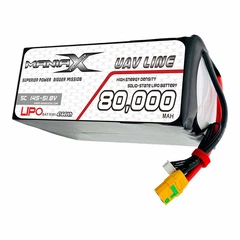
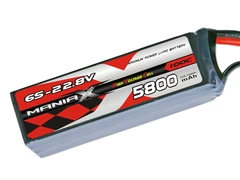
②High-Voltage LiPo Packs: The development of batteries that can operate at higher voltages (e.g., 24S and beyond) is a trend that will continue. Higher voltage systems are inherently more efficient, as they reduce current draw and heat generation. This allows for smaller, lighter wiring and ESCs, further improving overall power-to-weight ratios .
Conclusion
The future of drones is inextricably linked to the future of power. The next generation of UAVs will be powered not just by better batteries, but by intelligent, integrated energy systems. From AI-managed BMSs that predict failures before they happen, to shaped batteries that maximize every cubic millimeter of space, and hybrid systems that combine multiple technologies for ultimate performance, the energy landscape is evolving rapidly. For industry leaders, staying ahead means adopting not just the latest battery chemistry, but the entire ecosystem of intelligent power management that will define the next era of autonomous flight .


