

Introduction
In the rapidly evolving world of UAVs, performance is paramount. Whether for aerial mapping, industrial inspection, agricultural spraying, or film-making, a drone's success depends on a single, often underestimated component: its lithium polymer battery. The wrong choice can lead to reduced flight times, erratic power output, overheating, and potentially catastrophic mission failure. Selecting the correct LiPo battery is a strategic decision that involves balancing chemistry, voltage, capacity, discharge rate, and, above all, the sophistication of its Battery Management System (BMS). This guide provides a comprehensive framework for making that crucial choice .
Understanding the Core Components: Chemistry and Structure
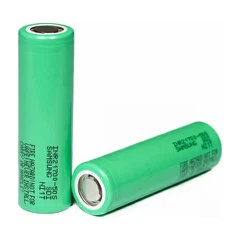
A LiPo battery's performance is rooted in its chemistry. Key components include a cathode (often Lithium Cobalt Oxide - LiCoO2, or other lithium-metal oxides), an anode (typically graphite), a polymer-based gel electrolyte, and a separator to prevent short circuits. This polymer electrolyte is the key differentiate from traditional Li-Ion batteries, allowing for lighter, more flexible packaging and enhanced safety by reducing the risk of leakage .
Step-by-Step Guide to Selection
Determine the Voltage Configuration:
The voltage of your battery must match the voltage requirements of your drone's motor and Electronic Speed Controller (ESC) system. A mismatch can damage components and degrade performance.
①For smaller, lightweight drones, configurations like 3S (11.1V) or 4S (14.8V) are common.
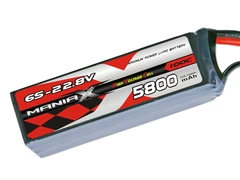
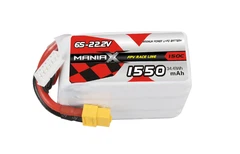
②Mid-range drones often use 4S or 6S (22.2V) setups.
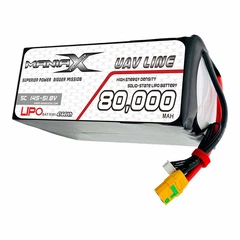
③For heavy-lift and industrial drones, you might require 12S (44.4V) or higher. A higher voltage system is more efficient because it draws less current to produce the same power, which reduces heat and improves overall efficiency .
Balance Capacity and Weight:
The capacity (mAh) dictates how long your drone can fly, but it also adds weight. A 1500mAh battery is suitable for small racing drones prioritizing agility, while a 12000mAh battery is better for industrial surveillance missions requiring endurance. The key is to find the sweet spot where the added flight time from extra capacity outweighs the negative impact of the additional weight on efficiency and maneuverability .
Match the Discharge Rate (C-Rating):
The C-rating is a measure of how quickly a battery can safely discharge its energy. High-performance UAVs require high C-ratings to provide burst power for takeoff and complex maneuvers. If the C-rating is insufficient, the battery will experience voltage sag, causing the drone to feel sluggish and potentially triggering a low-voltage cutoff mid-flight. For demanding applications, a C-rating of 50C to 100C or higher is often necessary .
Prioritize BMS Integration:
This is arguably the most critical step. A high-quality BMS transforms a simple power source into an intelligent, reliable energy system. For professional applications, a BMS is not optional; it is essential. It protects the battery from overcharge, over-discharge, and short circuits; it balances cells to maximize lifespan and performance; and it provides vital telemetry data like SoC and SoH, which is critical for safe flight planning . Drones equipped with an advanced BMS can transmit battery health data in real-time to the operator, allowing for proactive maintenance and preventing in-flight failures .
The LiPo vs. Li-Ion Choice for UAVs
While both are lithium-based, their differences are significant. LiPo batteries generally offer much higher discharge rates, making them superior for dynamic drone flight. Li-Ion batteries, on the other hand, typically offer a higher specific energy and longer cycle life but are limited by their lower discharge rates. For most UAV applications, especially those that are payload-capable or perform complex maneuvers, the high power output of a LiPo battery is the deciding factor .
The Future is Intelligent Energy
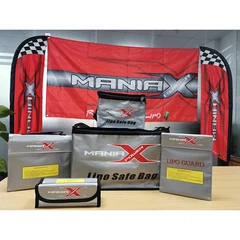
Choosing the right LiPo battery is about more than just raw specs; it's about integrating intelligent energy management. As UAV missions become more advanced and demanding, the competitive advantage will be defined by smart energy systems that combine cutting-edge LiPo chemistry with advanced BMS technology to deliver stability, safety, and reliability . Companies like ManiaX Technology are at the forefront of this integration, developing solutions for the next generation of safe and efficient drone power .


