

Introduction
The rapid evolution of unmanned aerial vehicles (UAVs) has fundamentally reshaped industries from logistics and agriculture to cinematography and public safety. At the heart of this technological revolution lies a single, critical component: the battery. For modern drones, the Lithium Polymer (LiPo) battery has emerged as the undisputed industry standard. Its unique combination of high energy density, lightweight construction, and remarkable discharge capabilities makes it the ideal power source for a wide range of aerial platforms, from tiny consumer quad-copters to heavy-lift industrial drones. However, the performance, safety, and longevity of these sophisticated energy storage devices depend on more than just their chemistry; they rely heavily on advanced Battery Management Systems (BMS) and proper operational protocols .
What is a Lithium Polymer Battery?
A Lithium Polymer battery, often referred to as a LiPo or Li-Poly battery, is a type of rechargeable lithium-ion battery that uses a polymer electrolyte instead of the liquid electrolyte found in conventional lithium-ion cells. This electrolyte is typically a gel-like substance that facilitates the movement of lithium ions between the anode (usually graphite) and the cathode (often lithium cobalt oxide or other lithium metal oxides) during charge and discharge cycles .
This polymer-based design offers several key advantages for UAV applications :
①High Energy Density: LiPo batteries pack a significant amount of energy into a lightweight package, which is the primary factor enabling extended flight times.
②High Discharge Rates: They can deliver rapid, powerful bursts of energy, which is essential for takeoff, rapid maneuvers, and carrying heavy payloads.
③Flexible Form Factors: Unlike rigid cylindrical cells, the flexible pouch design of LiPo batteries allows them to be manufactured in a variety of shapes and sizes. This flexibility is invaluable for drone designers who need to optimize weight distribution and fit batteries into tight, unconventional spaces.
④Lightweight Construction: The polymer electrolyte and flexible packaging significantly reduce weight compared to metal-cased lithium-ion batteries, directly improving the drone's thrust-to-weight ratio.
Key Specifications and How to Read Them
Selecting the right LiPo battery for a specific drone application requires a thorough understanding of its core specifications. These parameters define the battery's capabilities and limitations .
Capacity (mAh or Ah): Measured in milliampere-hours or ampere-hours, this indicates the total amount of energy the battery can store. A higher capacity (e.g., 5000mAh vs. 1500mAh) generally translates to longer flight times. However, higher capacity also means more weight, which can reduce agility and increase power consumption, creating a trade-off that operators must balance .
Voltage (V): The nominal voltage of a single LiPo cell is 3.7V. When fully charged, it reaches about 4.2V, and it should not be discharged below approximately 3.0V to prevent damage. Cells are connected in series (S) to increase voltage. Common configurations include :
3S (11.1V): Used in smaller, entry-level drones.
4S (14.8V): Common in mid-range consumer and racing drones.
6S (22.2V): Standard for many professional and industrial drones.
12S+ (44.4V and above): Utilized in high-power, heavy-lift industrial UAVs. Higher voltage systems are more efficient, as they draw less current for the same power output, reducing heat generation.
Discharge Rate (C-Rating): The C-rating indicates the maximum safe continuous discharge current relative to the battery's capacity. For example, a 5000mAh battery with a 50C rating can safely deliver a continuous current of 250A (5Ah * 50C). A higher C-rating is critical for high-performance drones that demand rapid power delivery. Inadequate C-ratings can lead to voltage sag, unstable flight, and overheating .
Internal Resistance (IR): This is a measure of the resistance within the battery. Lower IR is better, as it allows for more efficient energy transfer and less heat generation. As a battery ages, its internal resistance typically increases, indicating a loss in performance and capacity.
LiPo VS. Li-Ion for Drones
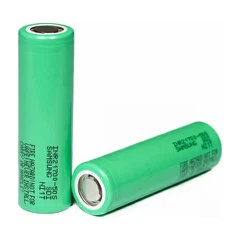
While both are lithium-based technologies, LiPo and Li-Ion batteries have distinct characteristics that make them suitable for different applications. For most dynamic drone applications, LiPo batteries are the preferred choice because they offer significantly higher discharge rates. This provides the rapid power bursts needed for takeoff, maneuvering, and payload lifting. While Li-Ion batteries often have a higher specific energy (Wh/kg) for longer endurance in some applications, LiPo batteries provide the superior responsiveness and power density that dynamic UAV flight demands .


